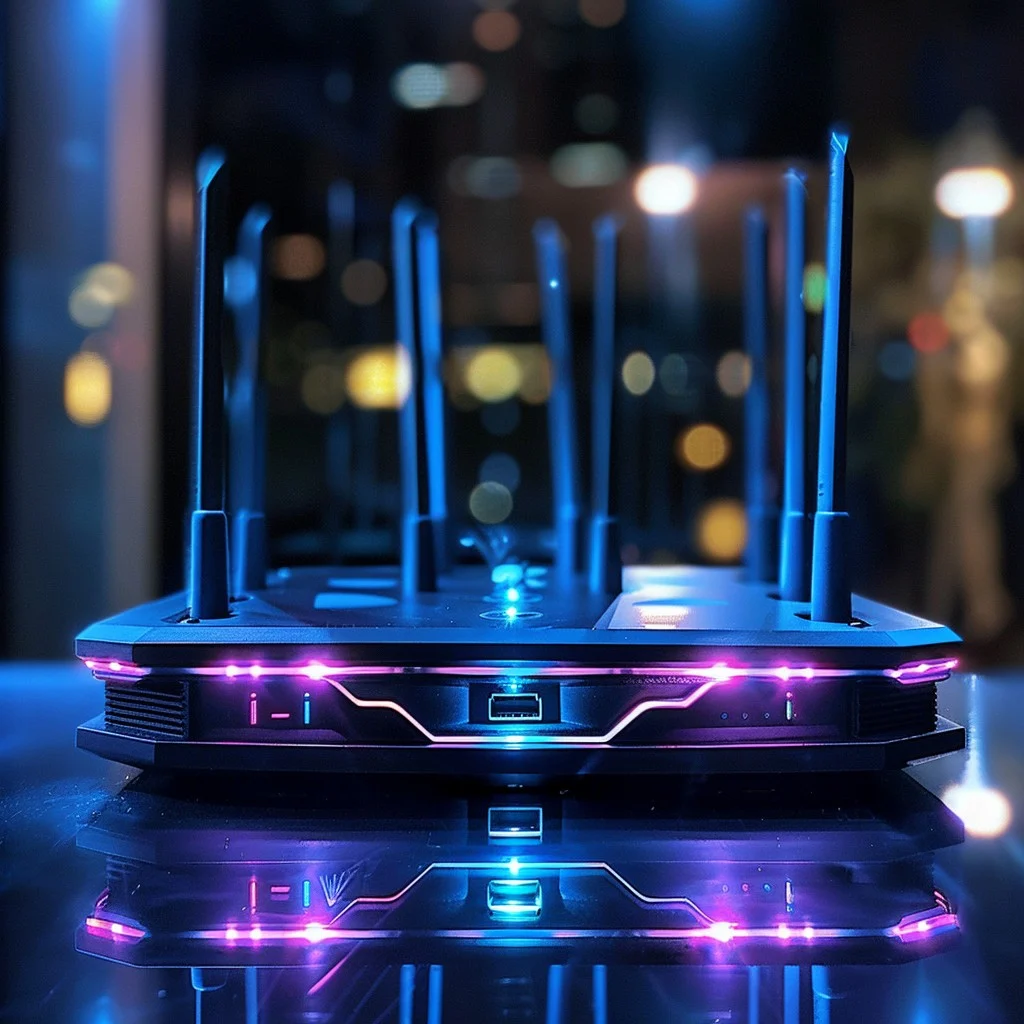
Difference Between 2, 3, and 4 Antenna Routers
The number of antennas on a router isn’t just for show — it directly affects signal strength, stability, and range. A 2-antenna router generally supports dual-band transmission and is suitable for small homes or apartments, offering a balance between speed and coverage.
A 3-antenna router can handle more simultaneous connections and often supports better beamforming, making it ideal for medium-sized homes with multiple devices.
A 4-antenna router is typically more powerful, offering extended coverage, improved speed on both 2.4GHz and 5GHz bands, and enhanced stability. These are best for larger homes or users with high-demand applications like gaming and 4K streaming.
More antennas mean better spatial data streams (MIMO technology), but performance also depends on processor quality and internal design — not just antenna count.
Wired vs Wireless Routers
Wired routers connect devices using Ethernet cables, offering high speed and low latency. They’re ideal for offices or setups where stable and secure internet is a must. Wired connections are less prone to interference and provide consistent performance.
Wireless routers, on the other hand, use Wi-Fi signals to connect multiple devices without cables. They offer flexibility and convenience, especially for mobile devices and smart home setups. Most modern routers are wireless and come with multiple Ethernet ports to support both types of connections.
Choosing between wired and wireless depends on your use case. Wired is best for gaming or workstations, while wireless is perfect for general home use and portability.
History of Routers
The concept of routers dates back to the late 1960s with the development of ARPANET, the foundation of today’s internet. Early routers were large, complex machines used in research and defense. As technology progressed, routers became smaller and more accessible to consumers.
By the 1990s, routers entered homes as broadband internet spread. Initially wired, they allowed multiple computers to connect to a single internet line. The early 2000s saw the rise of Wi-Fi routers, enabling wireless connectivity.
Modern routers now support advanced features like mesh networking, parental controls, app-based management, and Wi-Fi 6 standards. From bulky boxes to sleek, smart devices, routers have evolved into the powerful and intelligent backbone of every connected home.